
A family history from Kentucky & Tennessee
The Pages
Before Us.
What we inherit. What we carry.
What we leave behind.
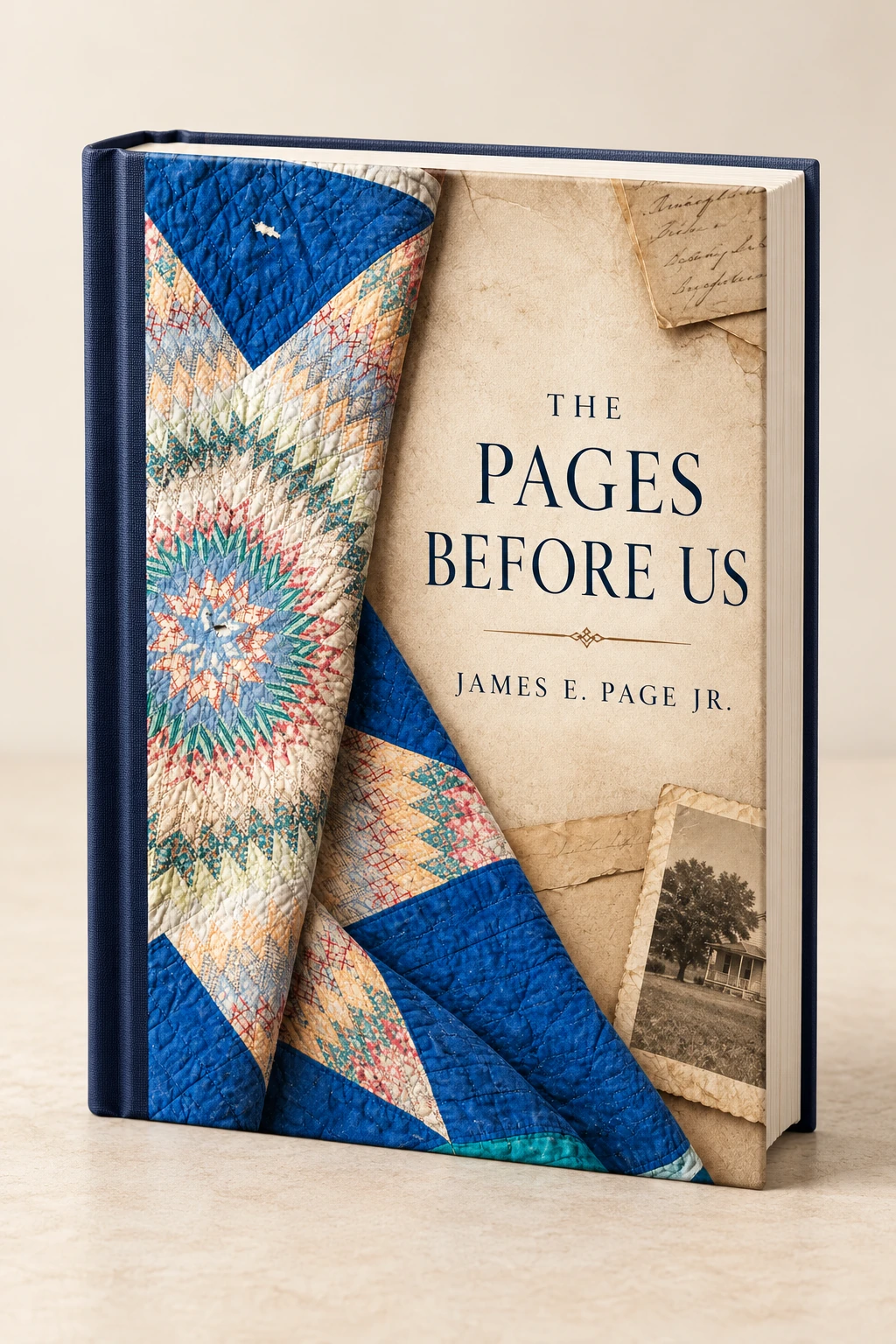
A Black family’s past, recovered one name at a time: from slavery-era estate inventories and an 1867 declaration of marriage, to voices recorded in 1972, to a great-aunt of ninety who looked at a photograph the family could only guess at and said, That’s my daddy.
From the Prologue
That’s My Daddy
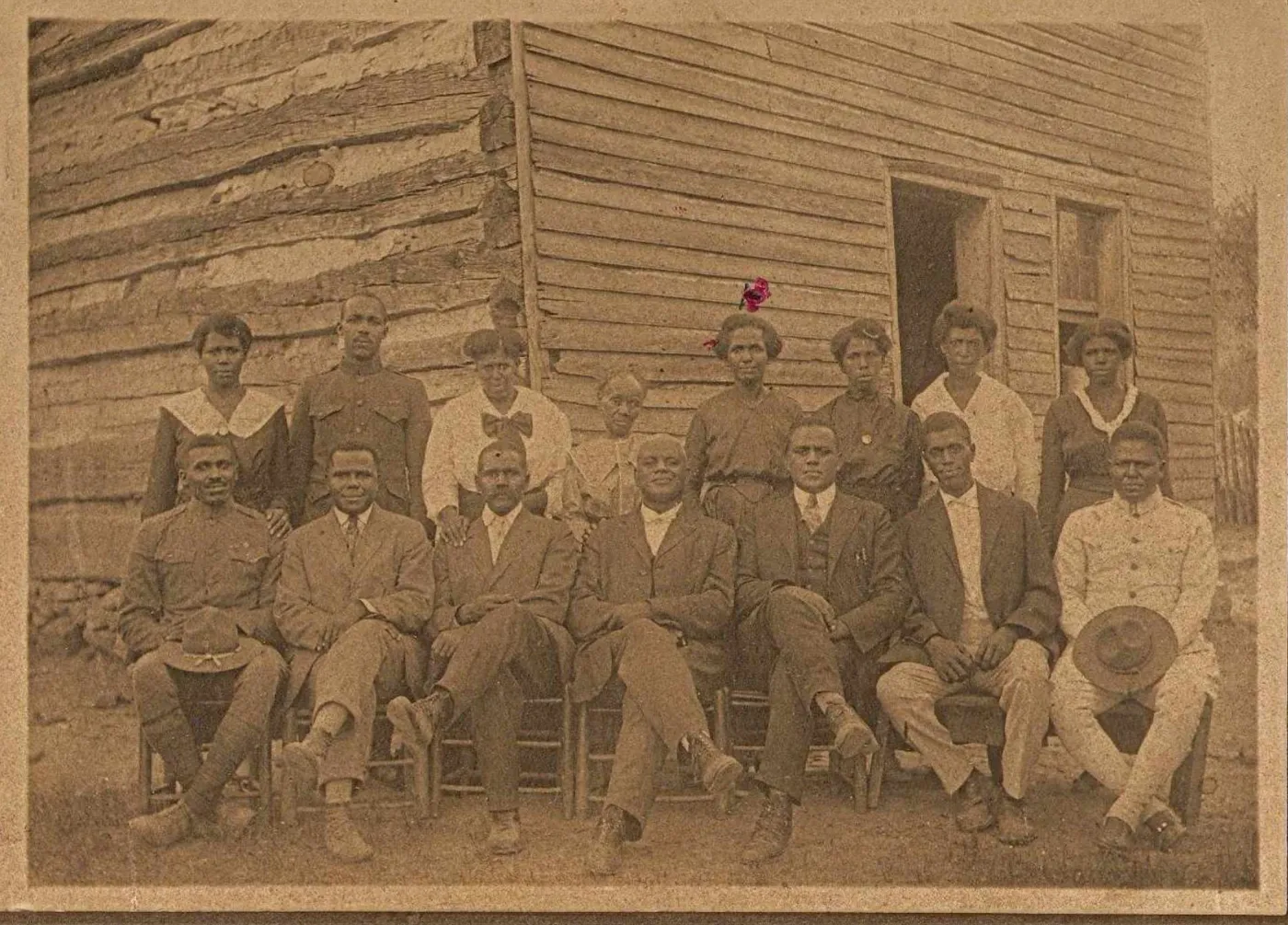
James drove from Nashville to Cleveland with three generations of family to thank the great-aunt who had helped start his search. At the beginning of the visit, ninety-year-old Aunt Sara struggled to recognize the family who had come to see her. She did not recognize herself in a video made fifteen years earlier. Then he showed her one of the oldest family photographs, one the family could only describe in maybes.
I pulled up one of the oldest Page photographs Ruth had sent me and held the phone where Sara could see it.
Her face changed.
It did not happen as some dramatic Hollywood awakening. She did not suddenly recognize everyone in the room or recover an entire lifetime. Her eyes simply focused differently. She leaned toward the screen. Something had reached her that the video of herself had not.
Then she pointed.
“That’s my daddy.”
This was precisely one of the photographs where Ruth had been careful not to pretend certainty. May be Earl Sr. May be his mother. May be his father. Sara had no interest in our genealogical hedging. She pointed to her father. Then she identified the woman standing above him as her mother. She began moving through the children. She pointed to one of the little boys and called him the baby.
That little boy was Earl Herman “June” Page Jr., her older brother.
My grandfather.
From the Prologue · Her own life, remembered
“I was Miss Central.”
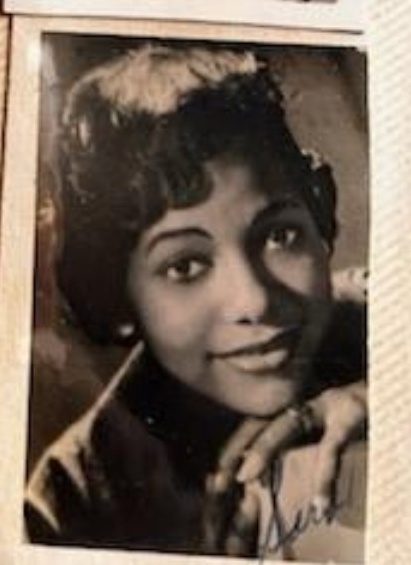
I showed her a portrait of herself as a young woman and asked whether she had been a cheerleader.
Sara corrected me.
“I was Miss Central.”
Not a girl who went to Central. Not a cheerleader. Miss Central. Her eyes brightened. Her posture changed. She said it again, and then again, and seemed prepared to continue until the room properly understood the importance of the information. She told us she had graduated from Central High School. When I asked whether she had led the band, she said yes, and the pride in her voice made clear that this, too, still belonged to her. The woman who had wanted us out of the building could still reach the young woman who had stood in front of it wearing the title.
Then she began talking about her hair. She studied the young woman in the photograph and showed us with her hands how she had styled it, how she had worked with it, how much care she had taken. The woman who had looked at a video of herself and said she did not know that woman could somehow still reach the girl who had looked in a mirror and known she was beautiful.
Why this book
You forgot somebody. Put him back.
When James’s great-grandfather died, the newspaper printed the names of his children and left one out. His aunt Andra called the paper and made them correct it.
“That may be as good a description of this project as any I have found. Put him back. Put her back. Put the names underneath the photographs before the people who know them are gone. Save the recording while somebody still knows whose voice you are hearing. … Do not turn uncertainty into certainty merely because certainty looks cleaner on a family tree. And when you do not know, have enough discipline to say that you do not know.”
From Chapter Fourteen · Old Aunt Mary
Old Aunt Mary.
In an 1865 estate inventory, James found a woman appraised at twenty-five dollars. He returned to an earlier Kelly inventory, from 1844, where one mule had been appraised at fifty.
Two inventories, twenty-one years apart. These were appraisers’ prices under slavery, never a measure of human worth.
Excerpt abridged; […] marks omitted passages.
I have always found value in elders. Their knowledge, their grace, the history they carry because they were there. As they grow older, their perspective becomes rarer. When we lose them, we lose something we cannot get back.
[…]
I am who I am because they were who they were.
[…]
Then I came to her name.
“Old Aunt Mary.”
Twenty-five dollars.In Daniel Kelly’s 1865 estate inventory, the appraisers valued her life at twenty-five dollars. I had been searching for my family. I was not prepared to find this.
[…]
She had lived long enough to be called old. Someone had known her when she was young. Who called her Aunt Mary? What did they know about her that this page would never tell me?
[…]
But I do not have to prove that Old Aunt Mary was my ancestor to feel what was done to her.
I wish I could have heard her voice.
I would have called her ma’am.
From Chapter Fifteen · The Other Door
“They wanted to stay together.”
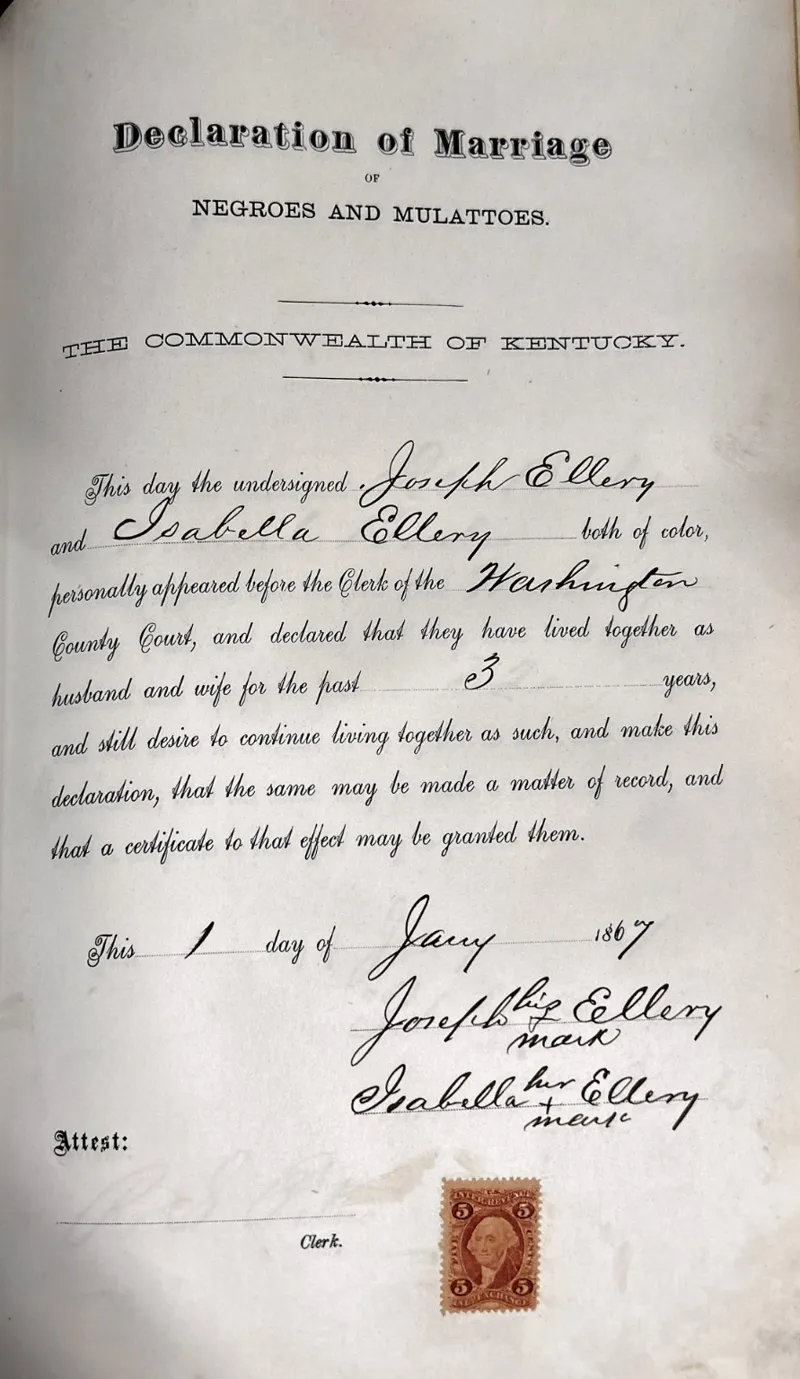
On January 1, 1867, Joseph and Isabella appeared before the clerk of the Washington County Court. They declared that they had already lived together as husband and wife for three years and intended to go on doing so. Their names and their marks were recorded beneath the state’s printed language. Kentucky had never given legal standing to the marriages of enslaved people. The form was the law catching up.
They had begun their marriage before the state was prepared to recognize it. On that January day they did not ask permission to start a household. They told the clerk about the one they had already made.
The classification belonged to the state. The marriage belonged to them.
The book
The past is not only something to discover.
It is something the living must decide how to steward.
The Pages Before Us begins with the effort to recover names, faces and voices in a Black family’s past and becomes an inquiry into how memory, land, faith, public records and family relationships shape what later generations inherit. Interviews, photographs, oral histories, estate and court records, and visits to ancestral places are woven into a first-person story about evidence, loss and responsibility.
- I
The Pages Before Me
Who handed me this life?
- II
The Baton
What did I receive, and what am I doing with it?
- III
The Pages After Me
What do I owe the people I cannot see, those who came before me and those who will come after?
Working draft of about 92,000 words. The Prologue and fifteen chapters are drafted; the final chapter and Epilogue are in progress.
The living archive
The book tells a story.
The archive keeps the doors open.
Behind the book is a private family archive: an interactive tree of 120 lives, home-video clips, recorded voices from 1972, and the original documents. Each record keeps its source and its limits beside it, and possible connections stay clearly marked until the evidence settles them.
- Interactive family tree
- Recorded voices & family films
- Original documents & transcriptions
- Places: Springfield, African Hollow, Louisville, Mammoth Cave
The archive is open by invitation to family and research partners. Sign in with the email address that received your invitation.
Get in touch
Someone knows
one more name.
If you are family, a descendant of the communities in these pages, a researcher, an archivist, or a publisher or agent interested in the book, James would like to hear from you.
Write to Jamesinfo@jamesepage.com
Email James to request book updates, ask about the archive or share a family connection.